How One Dog Owner Spent $6,800 Trying To Stop His Dog’s Reactivity — Before Three Vets Discovered What Everyone Had Missed
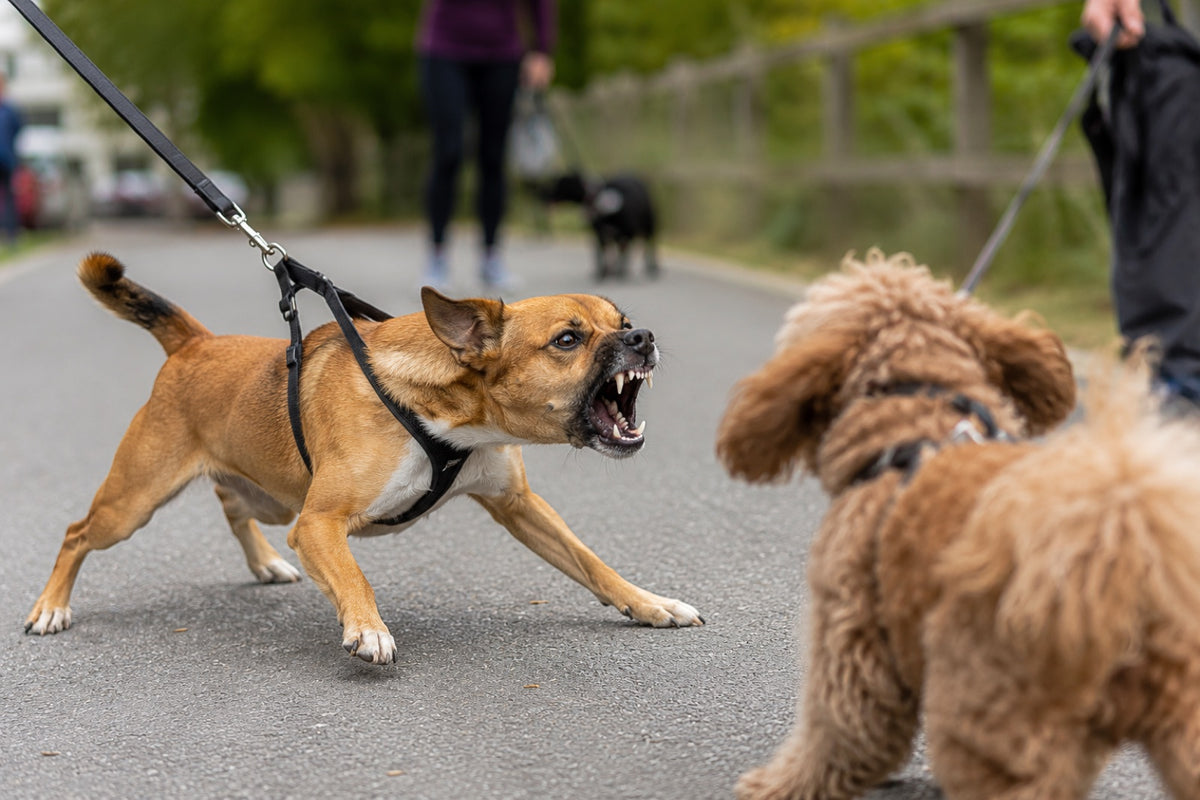
Every walk with Max had become something I dreaded.
He had been struggling with reactivity for months, and this was becoming our new normal.
Another dog across the street.
A person walking too close.
A bicycle coming toward us.
Within seconds, Max could be barking, lunging, and pulling so hard I could barely hold onto him.
I had already tried private training, group classes, different harnesses, gentle leaders, and behaviorists.
I just wanted to enjoy a normal walk with my dog again — without constantly scanning the street for whatever might set him off next.
But no matter how much money I spent or how closely I followed the advice, Max kept getting worse.
And after spending $6,800 trying to help him, I started asking myself the same question over and over:
“Why isn’t any of this working?”without having to plan my entire day around what might set him off.
Every day, I felt more helpless watching him struggle, knowing I still couldn’t understand why it was so hard for Stella to simply come back down again.
I Tried Every Trainer, Medication And Reactivity Protocol — But Max Kept Getting Worse

First, it was training classes. Then came private reactivity sessions, gentle leaders, front-clip harnesses, basket muzzles, and every technique I was told might help.
I even worked with two different veterinary behaviorists and put Max on prescription medication.
But no matter what I tried, Max kept getting worse:
- He lunged at dogs, people, and bicycles
- He barked and pulled so hard I could barely control him
- Eventually, he started snapping when people got too close
- Every walk became something I had to constantly manage
Every new attempt seemed to end the same way — more money spent, another protocol to follow, and Max still reacting.
For a while, something would seem to help.
Then we’d be right back where we started.
I just couldn’t understand why, after doing everything I was supposed to do, his reactivity kept getting worse.
After spending $6,800 on behaviorists, medication, and training, I started wondering if there was something everyone was missing.
Maybe we had been treating the behavior — while overlooking the system behind it.
Then Dr. Karen Mitchell Asked The Question That Changed Everything About Max’s Reactivity

Just when I felt like I had tried everything, Dr. Karen Mitchell asked a question that changed the way we looked at Max’s reactivity.
“What if we’ve been treating the wrong system?”
Instead of looking only at Max’s behavior, the veterinary team went back through his case and started investigating what might be happening beneath the surface. That eventually led them to look more closely at his gut health and the gut–brain connection.
All those training sessions, behaviorists, medications, and protocols I’d tried?
They weren’t necessarily pointless.
But they may have been addressing the reaction without looking closely enough at another system involved in stress and behavior.
And for the first time, I started wondering:
What if the missing piece wasn’t another training technique — but something happening inside Max’s gut?
The Postbiotic Gut–Brain Support Max Had Been Missing All Along

The breakthrough wasn’t another calming treat or another training protocol.
It was a postbiotic approach designed around the gut–brain connection.
The veterinary team had already looked at training, medication, and traditional probiotics. But the advertorial’s central discovery was that Max’s case kept pointing back to the gut — and specifically to the postbiotic compounds associated with a healthy gut environment.
Here’s what made this approach different:
- Traditional probiotics rely on live bacteria
- Postbiotics are the beneficial compounds associated with healthy gut activity
- They don’t rely on live bacteria surviving and colonizing
- They were the missing piece the team began focusing on for gut–brain support
And after everything Max had been through, that felt completely different from simply trying another calming chew.
That’s when the team found a daily postbiotic formula built around this exact approach.
It was called CalmCore™ Chews.

When we started recommending CalmCore™ to reactive dogs in our practice, we weren’t looking for an overnight miracle.
We were looking for a way to support the gut–brain system we had been overlooking for years.
And according to what we began seeing, most dogs showed noticeable changes within 2–4 weeks.
The goal wasn’t to turn them into completely different dogs.
It was to support the system beneath the behavior.
Dogs could still notice another dog, a bicycle, or a person getting too close.
But now we were finally addressing the gut–brain connection we believed had been missing from the picture.
And after everything we had seen with Max, that felt like the breakthrough we had been looking for.
Not another way to suppress the reaction — but a different system to support.
How The Gut–Brain Support Protocol Helps Dogs Recover After Triggers

The idea behind CalmCore™ didn’t start with another calming chew.
It started after Max’s case, when the veterinary team stopped looking only at his behavior and began looking more closely at his gut health and the gut–brain connection.
That led to a much bigger question:
What if reactivity isn’t only about what your dog sees, hears, or encounters — but also about the internal systems involved in how they respond to stress?
The gut and nervous system are constantly communicating with one another.
And in the investigation described in the advertorial, the team began seeing the same gut-health pattern across many of the reactive dogs they examined.
That’s why the gut–brain connection mattered so much:
- Stress and gut health can influence one another
- Gut-derived signals interact with the nervous system
- Reactivity may involve more than behavior alone
- Daily postbiotic support offered a different system to focus on
That didn’t mean training had been pointless.
It meant training might not have been the whole picture.
That became the thinking behind CalmCore™ Chews — daily postbiotic support designed around the gut–brain connection the team had been overlooking.
Not another training technique. Not another quick fix. A different system to support.
Why 94% Of Dog Parents See Results In The First 14 Days

After Max’s case, we started looking at reactive dogs differently.
Over the next six months, the team examined 112 dogs struggling with reactivity, leash aggression, or fear-based behavior. Many of them were already eating premium diets, working with trainers, and using calming supplements.
And once we began focusing on the gut–brain system we had previously overlooked, we started hearing about the kind of changes these owners had been desperately hoping for.
Not a completely different dog.
Not a dog who suddenly ignored every trigger.
But things like:
- Recovering more easily after another dog passed
- Spending less time staying wound up after a stressful walk
- Settling more easily once they got home
- Feeling calmer without losing their normal personality
If you check Paw & Fam’s website, you’ll find stories from dog parents who know exactly what it feels like to organize their entire life around a dog that just can’t seem to switch off.
People who had already tried training, calming chews, enrichment, different routines — and were starting to wonder whether anything would ever make everyday life feel easier.
Here’s the kind of change dog parents look for:
“The biggest difference wasn’t that he stopped noticing other dogs. He just stopped staying worked up for so long afterward. He settles again much faster now, and he’s still completely himself.” — Maria S.
“I was skeptical because we’d already tried several calming products. What I started noticing was the recovery. A noise or another dog could still get her attention, but she wasn’t pacing around for the next hour anymore.” — James T.
“For me it was the little things. Calmer evenings, less constant scanning, and more moments where he would just lie down beside me. I finally feel like we can enjoy normal life together again.” — Linda M.
They weren’t looking for a sedated dog. They wanted the same dog they loved — just better able to come back down and settle.
A Calmer Dog — Or Your Money Back

Here’s the deal: We’re so confident you’ll love making CalmCore™ part of your dog’s daily routine that every order is protected by our 90-day money-back guarantee.
Give CalmCore™ a fair try for up to 90 days. If you decide it isn’t the right fit for your dog, simply contact us and we’ll refund your purchase according to our guarantee terms.
You shouldn’t have to keep throwing money at calming products wondering whether this one will finally be different.
That’s why we’re currently offering:
- 60% OFF
- 90-day money-back guarantee
- Dedicated customer support
Most dog parents choose the Buy 3, Get 2 FREE package because it gives them enough CalmCore™ to build a consistent daily routine — while getting the biggest savings. Plus, for the first time ever, you will also receive a FREE treat pouch and FREE shipping with this package!
Because CalmCore™ isn’t designed as something you reach for only after your dog is already worked up.
It’s designed to become part of what you do every day.
One simple chew.
Consistent gut–brain support.
The same dog you love — better supported when it’s time to settle.

UPDATE: Due to high demand, this special offer may end at any time

“I was skeptical after trying so many calming products, but CalmCore™ genuinely surprised me. My dog used to pace, bark, and stay worked up long after the trigger was gone. Now she comes back down much faster, settles in the evenings, and seems more at ease overall. She hasn’t lost any of her personality — she just seems better able to switch off.”

“My senior dog used to pace around the house and react to every little sound. After a few weeks of CalmCore™, I noticed he was settling much faster and spending more time actually relaxing beside us. He still has all his personality and energy — he just doesn’t seem constantly ‘on’ anymore. I’m so impressed with the difference.”

“I’d tried so many calming products before CalmCore™ and was starting to think nothing would help. Now my dog settles faster after triggers, paces less in the evenings, and seems so much more at ease at home. He still has all his personality — he just doesn’t seem constantly ‘on’ anymore.”

“My dog used to stay wound up long after the trigger was gone. After using CalmCore™ consistently, I started noticing she was settling faster, pacing less, and relaxing much more easily at home. She’s still completely herself — just calmer when it matters most.”